
Healthy, youthful skin relies on the body’s ability to regenerate itself. One of the most important biological processes behind this renewal is collagen stimulation. Collagen is the protein responsible for maintaining skin firmness, elasticity, and structural support. When collagen levels decline, the skin gradually becomes thinner, less resilient, and more prone to wrinkles or volume loss.
Modern aesthetic medicine increasingly focuses on regenerative therapies that activate the body’s natural repair mechanisms. Among these treatments, PRF (Platelet-Rich Fibrin) has emerged as one of the most promising options for patients seeking natural-looking results.
PRF harnesses the body’s own healing factors to support skin rejuvenation, improve under-eye concerns, and even assist with hair restoration therapy. Because it uses components derived directly from the patient’s blood, PRF is considered a highly natural and minimally invasive aesthetic treatment.
Patients often have questions about how PRF works, what results they can expect, and whether it is the right choice for their aesthetic goals. Continue reading to explore expert answers to the most frequently asked questions about PRF treatments.
Why Collagen Matters for Healthy Skin
Before exploring PRF itself, it helps to understand the essential role collagen plays in maintaining healthy skin and hair.
- Maintains Skin Structure. Collagen acts as the internal framework of the skin. It provides strength and support that keep the skin firm and smooth. As collagen declines, the skin may lose elasticity and develop wrinkles.
- Supports Skin Elasticity. Elasticity allows the skin to stretch and return to its natural shape. Collagen fibers work together with elastin to maintain this flexibility. When these proteins decrease, the skin becomes more prone to sagging.
- Promotes Skin Renewal. Healthy collagen levels support ongoing skin regeneration. This process replaces damaged cells with new ones, helping maintain smooth texture. Treatments that stimulate collagen encourage this natural renewal cycle.
- Improves Skin Hydration. Collagen contributes to the skin’s ability to retain moisture. When collagen levels are strong, the skin often appears plumper and more radiant. This hydration support plays a role in maintaining youthful skin.
- Supports Hair Follicle Health. Collagen also contributes to the environment surrounding hair follicles. A healthy follicle environment supports stronger hair growth and improved scalp health.
At Alyne Aesthetics & Med Spa, treatments such as PRF facial treatment and hair restoration procedures help stimulate collagen production.
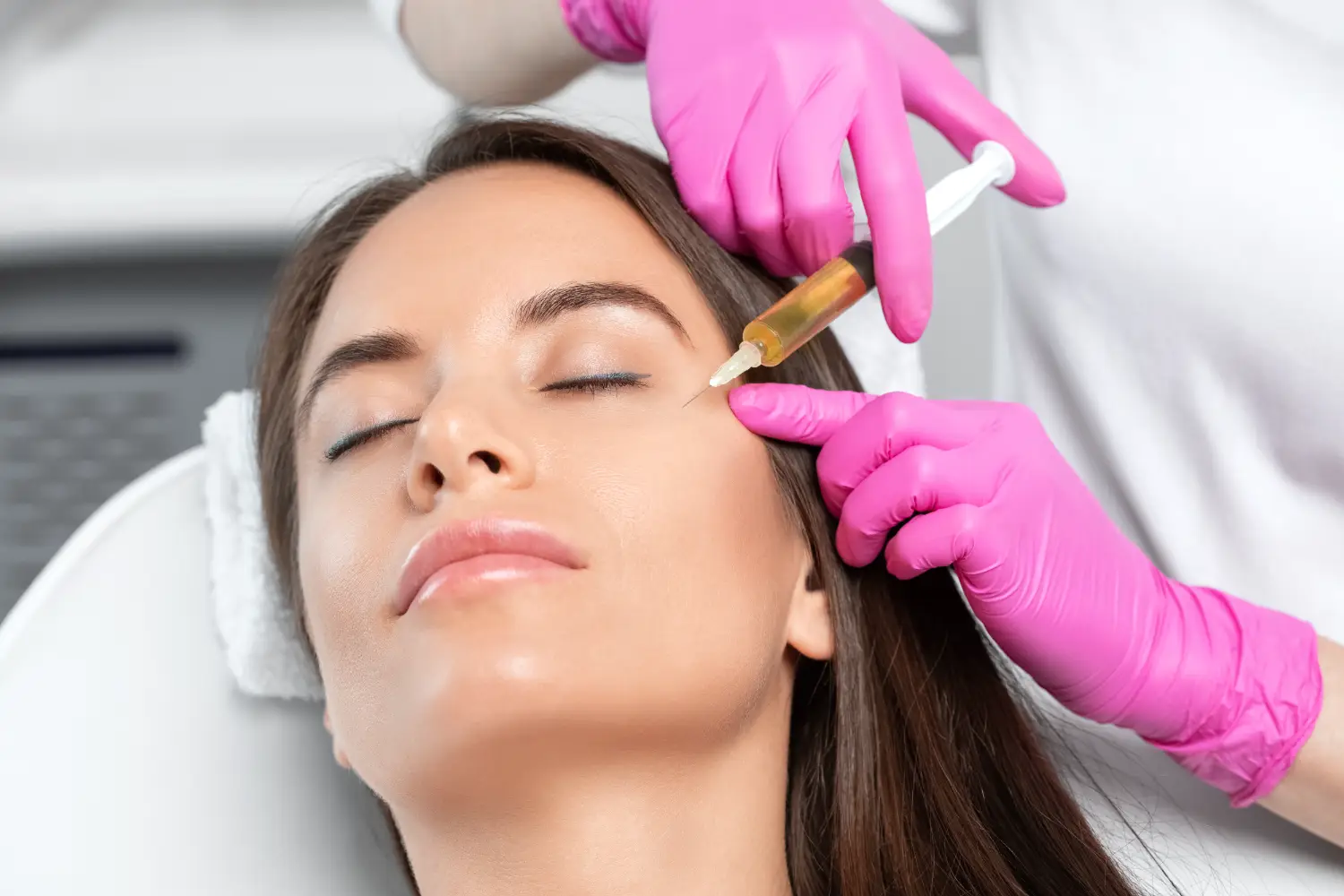
What Is PRF?
PRF (Platelet-Rich Fibrin) is an advanced regenerative treatment derived from the patient’s own blood.
PRF is considered an enhanced version of PRP (Platelet-Rich Plasma). While both treatments use platelets to promote healing, PRF contains a higher concentration of white blood cells and fibrin.
The fibrin component forms a natural scaffold that gradually releases growth factors into the surrounding tissue. This slow release allows for sustained tissue regeneration and more prolonged collagen stimulation compared to PRP.
PRF treatments are commonly used for:
- PRF facial treatment to improve skin quality
- Under-eye rejuvenation for hollowing and dark circles
- Hair restoration therapy to support hair follicle health
Because PRF uses the patient’s own biological material, the treatment supports natural healing and rejuvenation processes.
PRF Frequently Asked Questions
Patients considering PRF often want to understand how the treatment works and what they can expect.
Below are answers to some of the most common questions about PRF.
1. How Does PRF Work?
PRF works by delivering growth factors directly into the skin or scalp. During the treatment, a small sample of the patient’s blood is collected and processed in a centrifuge. This process separates the fibrin-rich plasma containing platelets and white blood cells.
Once injected or applied to the treatment area, the PRF gradually releases growth factors that stimulate tissue regeneration and collagen production.
2. What Makes PRF Different From PRP?
PRF and PRP share similar regenerative principles, but PRF offers several enhancements. PRF retains more white blood cells and fibrin, creating a matrix that supports the slow release of growth factors.
This sustained release allows the treatment to stimulate collagen for a longer period. As a result, PRF may provide deeper and more durable rejuvenation compared to PRP.
3. What Areas Can PRF Treat?
PRF is versatile and can address several aesthetic concerns. Common treatment areas include the under-eye region, cheeks, and scalp. The treatment can help improve skin texture, reduce hollowing, and support hair growth.
Because of its regenerative properties, PRF works well for both skin rejuvenation and hair restoration therapy.
4. Is PRF a Natural Treatment?
PRF is considered one of the most natural regenerative treatments available. Because it uses the patient’s own blood components, the treatment avoids synthetic substances.
The growth factors are naturally occurring proteins that support healing and regeneration. This biological compatibility makes PRF a popular minimally invasive aesthetic treatment.
5. How Long Does a PRF Treatment Take?
A typical PRF session is relatively quick and convenient. The procedure usually takes about 30 to 45 minutes.
This includes blood collection, processing, and the injection process. Many patients appreciate that the treatment fits easily into busy schedules.
6. When Do Results Become Visible?
PRF works by stimulating natural regeneration, which takes time. Patients may begin noticing improvements in skin texture or brightness within several weeks.
Because collagen production continues gradually, results often improve over time. The regenerative process can continue for several months following treatment.
7. How Many Treatments Are Needed?
The number of sessions required depends on the patient’s goals and treatment area. For skin rejuvenation, providers often recommend a series of treatments spaced several weeks apart.
Hair restoration therapy may also involve multiple sessions to support follicle stimulation. Maintenance treatments may be recommended to sustain results.
8. Is PRF Safe?
PRF is widely considered a safe treatment when performed by trained professionals. Because the treatment uses the patient’s own biological material, the risk of allergic reaction is extremely low.
The procedure is also minimally invasive. Most patients experience only mild swelling or redness following treatment.
9. Can PRF Improve Under-Eye Concerns?
The under-eye area is one of the most popular uses for PRF. This delicate region often develops hollowing or dark circles as collagen declines.
PRF helps stimulate collagen and improve tissue quality in this area. Many patients appreciate the natural rejuvenation achieved with PRF under-eye treatments.
10. Can PRF Help With Hair Loss?
PRF has shown promising results for hair restoration therapy. Growth factors released from the PRF stimulate hair follicles and improve scalp health.
This process can strengthen existing hair and encourage new growth. For patients experiencing thinning hair, PRF offers a regenerative approach to hair restoration.

Why Patients Choose PRF
PRF continues to gain popularity because it combines regenerative science with natural treatment methods.
Patients appreciate treatments that activate the body’s own healing capabilities rather than relying solely on synthetic products.
With benefits ranging from collagen stimulation to tissue regeneration, PRF provides a versatile option for patients seeking natural rejuvenation.
Natural Regeneration for Lasting Results
Advances in aesthetic medicine increasingly emphasize treatments that support the body’s ability to renew itself.
Alyne Aesthetics & Med Spa in Tracy, CA, offers advanced regenerative treatments such as PRF facial treatment, designed to support skin rejuvenation, encourage collagen stimulation, and assist with hair restoration therapy through natural tissue regeneration.
Because true rejuvenation begins at the cellular level, PRF allows the body’s own healing power to lead the way.
Get in touch with us today to schedule your appointment!