
Skin can begin to feel different long before it looks dramatically loose. The jawline may soften, the cheeks may not feel quite as firm, and areas that once looked smooth can start showing a little more laxity. For many patients, these changes are not severe enough to justify surgery, yet they are noticeable enough to make skin tightening worth exploring.
That is where XERF can come into the conversation. This radiofrequency-based treatment is designed to deliver heat at more than one tissue depth, helping support collagen remodeling and gradual improvement in firmness. It is intended for patients who want a nonsurgical option with manageable treatment time and little interruption to daily life.
If you are wondering whether you are the right type of patient for XERF, keep reading. The most important part of candidacy is not age alone. It is understanding how much laxity you have, what kind of result you want, and whether your skin concerns match what radiofrequency treatment is designed to address.
What Is XERF?
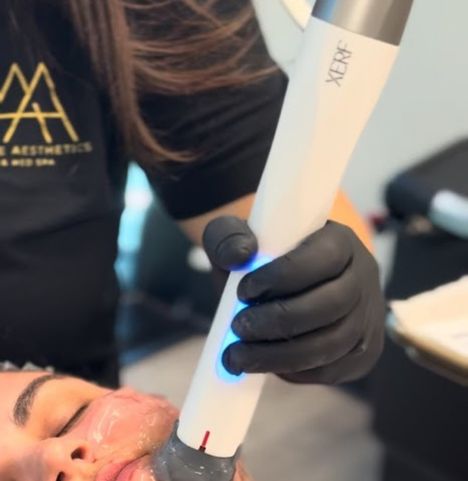
XERF is a non-surgical radiofrequency treatment designed to improve skin firmness by delivering controlled heat into different tissue depths. Its technology uses two frequencies, which allows the treatment to address more superficial concerns and deeper structural support within the same session.
According to the treatment information provided, XERF uses a 6.78 MHz frequency for more superficial layers and a 2 MHz frequency to reach deeper tissue. This dual-frequency design is intended to address both fine surface laxity and more meaningful structural support at the same time.
The treatment also incorporates Wave Fit™ pulse technology and intelligent cooling. These features are designed to help maintain comfortable surface temperatures while therapeutic heat is delivered below the skin. That combination is intended to make treatment more tolerable while still creating the thermal response associated with collagen remodeling.
A typical XERF treatment may take approximately 60 to 90 minutes. Because numbing is not always required, treatment can often fit more easily into a busy schedule. Patients can generally return to normal activities immediately afterward, which makes the procedure appealing to people who want skin tightening without surgical recovery.
The treatment is also described as supporting continued improvement over several months as the body produces new collagen, elastin, and hyaluronic acid. This gradual response is central to understanding what XERF is designed to do. It is not an instant lift in the same way a surgical procedure can be. It is a progressive skin-firming treatment that works through a controlled thermal response.
Who Makes a Good Candidate for XERF?
The best candidates for XERF are generally patients whose skin changes are early enough to respond well to a nonsurgical approach. The following qualities can help determine whether this type of treatment aligns with your concerns and expectations.
1. You Have Mild to Moderate Skin Laxity
One of the strongest indicators that XERF may be appropriate is the degree of skin looseness. Patients with mild to moderate laxity often make better candidates for radiofrequency skin tightening than patients with significant excess skin.
If the jawline is beginning to soften, the lower face feels less defined, or the skin seems slightly less resilient, XERF may be worth discussing. This is very different from advanced sagging. A non-surgical device cannot remove loose tissue or reposition facial structures the way surgery can.
When excess skin is substantial, radiofrequency treatment may produce some improvement without delivering the degree of correction the patient expects. That distinction is important because a good result starts with the right level of concern.
XERF is strongest when the problem matches what controlled RF energy can realistically improve.
2. You Want Gradual Firming
Some patients want to leave a treatment appointment looking dramatically different. XERF is usually a better fit for patients who are comfortable with gradual improvement. The heat generated during treatment is intended to stimulate collagen remodeling and support new structural proteins over time.
As that process develops, the skin may gradually appear firmer and more supported. This makes XERF attractive to people who prefer subtle changes that evolve naturally. Rather than seeing an abrupt shift from one day to the next, patients may notice that the jawline looks cleaner or the skin feels denser over the following months.
For someone interested in skin tightening in Tracy, CA, this slower timeline can actually be an advantage. The result can appear more natural because the skin changes progressively rather than suddenly.
3. Your Jawline Is Starting to Soften
The lower face is one of the first places many patients notice changing firmness. A jawline that once looked crisp may begin blending more gradually into the neck. Early jowling can also appear as support within the skin changes. These shifts often make patients feel that the lower face looks heavier even when their weight has not changed.
XERF may be considered for jawline tightening when laxity is mild to moderate. The deeper 2 MHz frequency is designed to reach tissue layers associated with structural support, while the higher 6.78 MHz frequency works more superficially.
That dual-frequency approach makes the treatment especially relevant when both surface firmness and deeper support need attention. Still, jawline concerns can also involve fat, facial structure, or significant skin excess.
A consultation should determine what is actually creating the softness before deciding whether XERF is the right tool.
4. You Want a Non-Surgical Option
Not everyone is looking for a facelift, and not everyone needs one. Some patients simply want an earlier intervention before laxity progresses further. Others may not want incisions, anesthesia, or the recovery associated with surgery.
XERF can appeal to these patients because it provides a nonsurgical route to skin firming. The treatment does not cut, remove, or reposition tissue. Instead, it works through controlled radiofrequency energy and the body’s own remodeling response. This is important when discussing skin laxity treatment because nonsurgical procedures and surgery should not be treated as interchangeable.
XERF offers a different level of intervention for a different type of patient. A good candidate understands that trade-off and values the balance between improvement and minimal disruption.
5. You Have a Busy Schedule
Treatment time and downtime matter more than people sometimes admit. A procedure may be clinically appropriate but still feel unrealistic if it requires several days away from work, family responsibilities, or social plans.
XERF sessions are typically completed in about 45 to 60 minutes, and patients can generally return to normal activities afterward. No numbing may be required, which can also shorten the overall visit. This makes treatment easier to fit into everyday life.
For busy patients exploring non-surgical skin tightening, this convenience can be a major part of the appeal. The treatment may be scheduled without needing to plan an extended recovery period.
Of course, minimal downtime does not mean the treatment is biologically inactive. The skin continues responding internally as collagen remodeling progresses.
6. You Prefer a More Comfortable RF Experience
Comfort can be a deciding factor, especially for patients who have hesitated to try energy-based treatments. XERF uses Wave Fit™ pulse technology and intelligent cooling to help regulate surface temperature while heat is delivered below the skin. This is designed to make the experience more comfortable than some older RF approaches.
Patients should still expect warmth. After all, heat is the mechanism used to stimulate the tissue response. The goal is not to make the procedure completely sensation-free. It is to deliver therapeutic heat while keeping the surface experience manageable. This can make XERF appealing to patients who want effective radiofrequency skin tightening but are concerned about discomfort.
7. You Want More Than Surface Improvement
Creams, serums, and facials can improve hydration and temporarily enhance the way the surface looks. What they cannot do is deliver controlled energy into deeper tissue. XERF is designed to work at multiple levels. The 6.78 MHz frequency focuses more superficially, while the 2 MHz frequency penetrates deeper for structural support.
That means the treatment is aimed at more than temporary surface smoothing. Patients who feel that their skin has become less firm or resilient may appreciate this deeper approach. The objective is not just to make the skin look better for a day or two.
It is to stimulate processes associated with collagen, elastin, and hyaluronic acid production. This makes XERF a more structural treatment than a traditional facial.
8. You Are Comfortable With Progressive Results
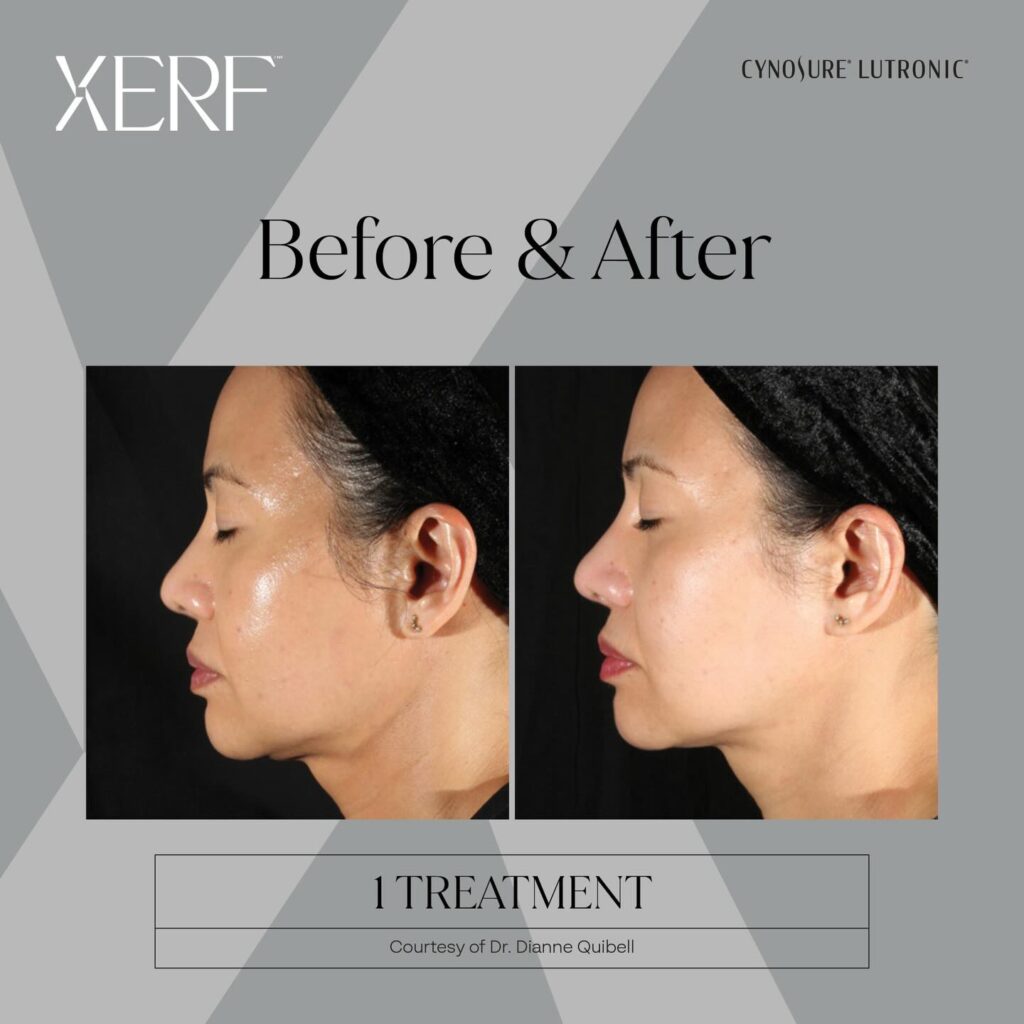
Patience is one of the most important qualities of a good XERF candidate. Because the treatment depends partly on collagen remodeling, the best results do not appear instantly. The body needs time to respond to the controlled thermal stimulation.
Patients may notice some early firmness, but continued improvement can occur over several months as structural proteins develop. This makes XERF particularly suitable for people who understand that regenerative-looking changes happen gradually.
If your expectation is a dramatic lift immediately after the appointment, another treatment category may be more appropriate. If you are comfortable allowing the skin to improve naturally over time, XERF may fit much better.
A Smarter Approach to Skin Firmness
The ideal candidate for skin tightening does not need to have severe laxity. In fact, XERF may make the most sense when changes are still mild to moderate and the goal is to support firmness before surgical-level correction becomes necessary.
At Alyne Aesthetics & Med Spa in Tracy, CA, patients can explore XERF through a personalized assessment focused on skin quality, degree of laxity, treatment goals, and lifestyle. If you want firmer-looking skin, improved jawline definition, and a nonsurgical approach with minimal disruption, a consultation can help determine whether XERF is the right fit for your skin.
Contact us today to book your appointment!